

Kitchen countertops set the tone for the whole room. They are where you prep dinner, set down your morning coffee, and lean while you talk with guests. They also take the hardest daily use in the space — heat, spills, cleaning products, and the occasional dropped pan.
If you are planning a kitchen remodel in Phoenix, Scottsdale, or the East Valley, choosing the right countertop material is one of the most important decisions you will make. The right slab balances how you cook, how the space looks, and how it holds up in Arizona’s dry heat and intense sun.
This guide walks through the most popular kitchen countertop options, current style trends, and practical advice I share with clients every week as a designer at 123 Remodeling.
How to Choose a Kitchen Countertop That Fits Your Home
Before you fall in love with a slab photo online, step back and answer three questions:
How will you use the kitchen? A busy family kitchen needs forgiving surfaces on the perimeter and at the sink. A dedicated baking zone can lean toward marble or butcher block. Outdoor kitchens near the pool need UV-stable materials.
What is your maintenance comfort level? Some stones need periodic sealing. Engineered quartz and porcelain are lower maintenance. Honest answers here prevent regret two years in.
What is your budget — including fabrication? Material cost is only part of the picture. Edge profiles, waterfall sides, seam placement, and cutouts for sinks and cooktops all affect the final number. Our 2025 Guide to Remodeling Costs in the Valley breaks down typical ranges for kitchen projects.
Expert Tip: Visit a slab yard in person. Screens lie. A quartzite that looks cool gray under showroom LEDs can read warm cream in your kitchen’s afternoon sun. Bring cabinet samples and paint chips when you shop.
Natural Stone Countertops
Natural stone brings depth, movement, and a one-of-a-kind look no factory can fully replicate. Each slab is unique — which is the appeal and the challenge.
Granite
Granite remains a proven choice for Arizona kitchens. It handles heat well, resists scratches when sealed properly, and comes in hundreds of colors — from subtle whites and grays to bold blues and greens that complement desert-inspired interiors.
Popular suppliers include MSI, Arizona Tile, and local slab yards across the Valley. Expect to seal granite every one to three years depending on color and use. Darker, denser varieties often need less frequent attention.
Best for: Homeowners who want natural stone at a moderate price point and do not mind occasional sealing.
Marble
Marble delivers timeless luxury — soft veining, luminous depth, and instant high-end character. Calacatta and Carrara patterns remain classics in statement kitchens and dedicated prep zones.
Marble is softer and more porous than granite. It etches from acidic foods and drinks (lemon, wine, tomato sauce) and can stain without care. Many clients use marble on a baking zone or beverage station while choosing a tougher material for heavy-duty prep areas along the main run.
Best for: Low-traffic kitchen zones, homeowners who accept patina, or spaces where appearance outweighs maximum durability on every surface.
Quartzite
Quartzite sits at the intersection of beauty and performance. Despite the similar name, it is natural stone — harder than granite and far more durable than marble. Stones like Taj Mahal, White Macaubas, and Fantasy Brown offer marble-like veining with better everyday resilience.
On our Scottsdale home renovation, the homeowner selected Taj Mahal quartzite for the kitchen. We sized the island to fit a single slab and avoid a visible seam — a detail that only works when material selection happens early in the design process.
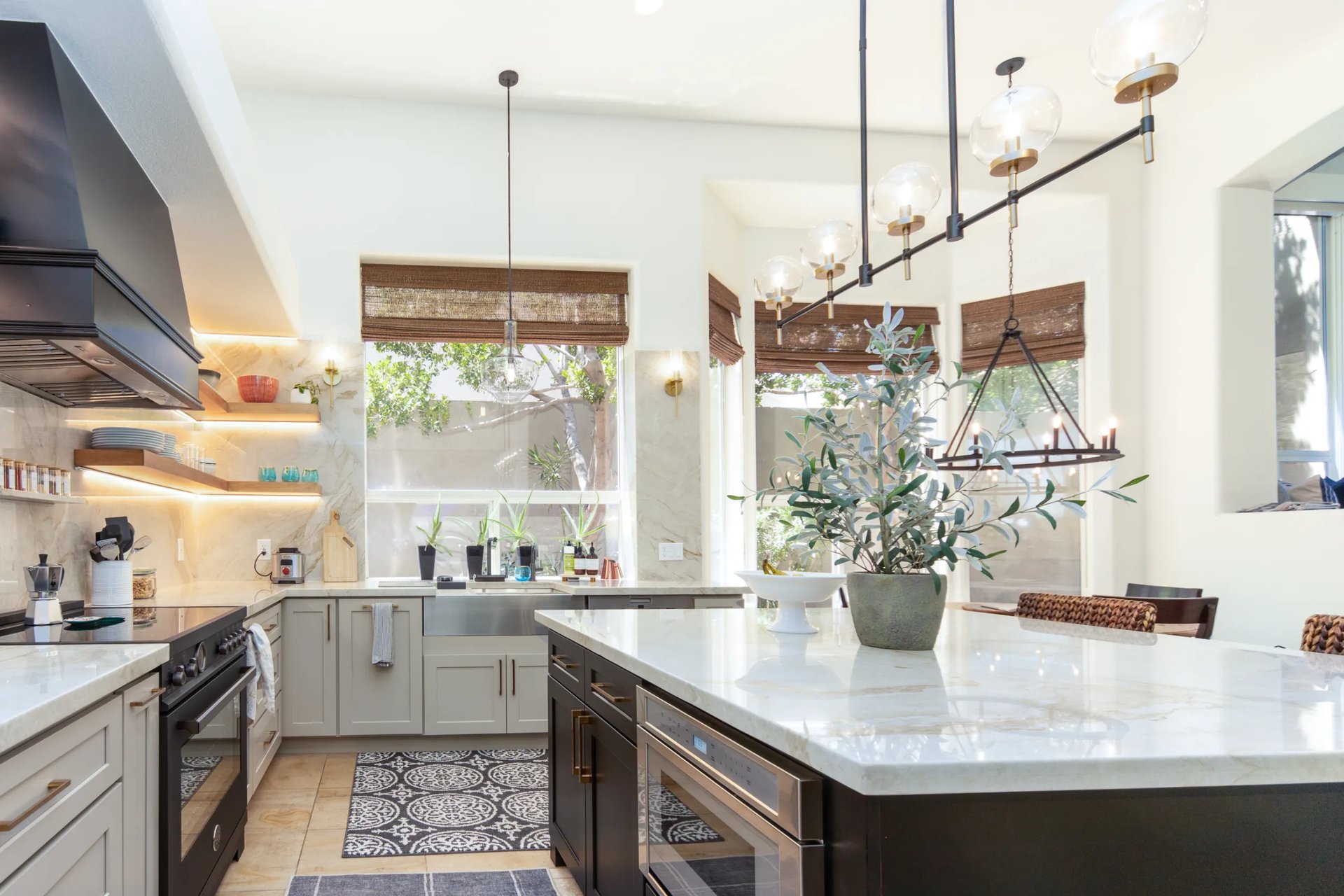
Best for: High-end kitchens where you want natural movement without marble’s maintenance demands. Always verify the slab is true quartzite; some stones sold under similar names are softer dolomitic marble.
Engineered Quartz Countertops
Engineered quartz — brands like Caesarstone, Cambria, Silestone, and MSI Q Quartz — combines roughly 90% ground quartz with polymer resins. The result is non-porous, consistent, and available in colors from pure white to concrete gray to warm veined patterns that mimic natural stone.
Quartz handles daily kitchen life well. It resists stains and does not need sealing. Place hot pots on trivets, though; extreme heat can damage the resin binders. For Arizona homes, quartz performs reliably in climate-controlled interiors and has become the default recommendation for many kitchen remodel trends.
On our Bottle Green Kitchen project, Ventao Gold Quartz with warm veining tied together brass hardware, exposed brick, and deep green Ultracraft cabinetry — proof that engineered surfaces can feel anything but generic.
Best for: Busy households, rental properties, and anyone who wants low maintenance with predictable patterning across large installations.
Porcelain and Sintered Stone
Large-format porcelain slabs from Neolith, Dekton, Porcelanosa, and Lapitec have moved from commercial settings into residential kitchens at a fast clip. These surfaces are fired at extreme temperatures, making them highly resistant to heat, UV light, scratches, and stains.
Porcelain works beautifully for:
- Outdoor kitchen counters and grill surrounds
- Full-height backsplash and counter combinations
- Homes with floor-to-ceiling glass where sun hits surfaces directly
The material can feel cooler to the touch than wood or laminate — a welcome trait during Phoenix summers. Fabrication requires specialized equipment, so choose an installer experienced with thin large-format slabs.
Best for: Outdoor living, modern minimal kitchens, and homeowners who want maximum durability with a contemporary matte or stone-look finish.
Other Countertop Materials Worth Knowing
Expert Tip: We at 123 Remodeling do not recommend going with these options. For the best results it’s better to stick with traditional countertop materials.
Solid Surface
Seamless integration, repairable scratches, and molded sinks make solid surface a practical choice for laundry rooms, pantry counters, and commercial-style clean aesthetics. It scratches more easily than stone but sands out.
Butcher Block
Wood counters add warmth and are gentle on knives. Use them on an island prep zone rather than the entire perimeter if you cook often. Oil regularly and keep standing water away from seams.
Concrete
Poured or precast concrete offers an industrial, custom look. Proper sealing is essential in Arizona’s dry climate, where rapid curing can cause hairline cracks if not handled by an experienced fabricator.
Laminate
Modern laminates from Wilsonart and Formica have improved dramatically. They suit budget-conscious updates, rental turnovers, and laundry areas where cost matters most.
Countertop Styles: Edges, Thickness, and Layout
Material is only half the story. How the counter is shaped and installed defines the room’s personality.
Edge Profiles
| Edge | Look | Notes |
|---|---|---|
| Eased / straight | Clean, modern | Most affordable; suits contemporary kitchens |
| Beveled | Subtle detail | Catches light along the edge |
| Bullnose | Soft, rounded | Family-friendly; traditional kitchen styles |
| Ogee | Ornate, formal | Pairs with classic cabinetry |
| Mitered / laminated | Thick, substantial | Stacks material for a 2”+ appearance |
Waterfall Islands
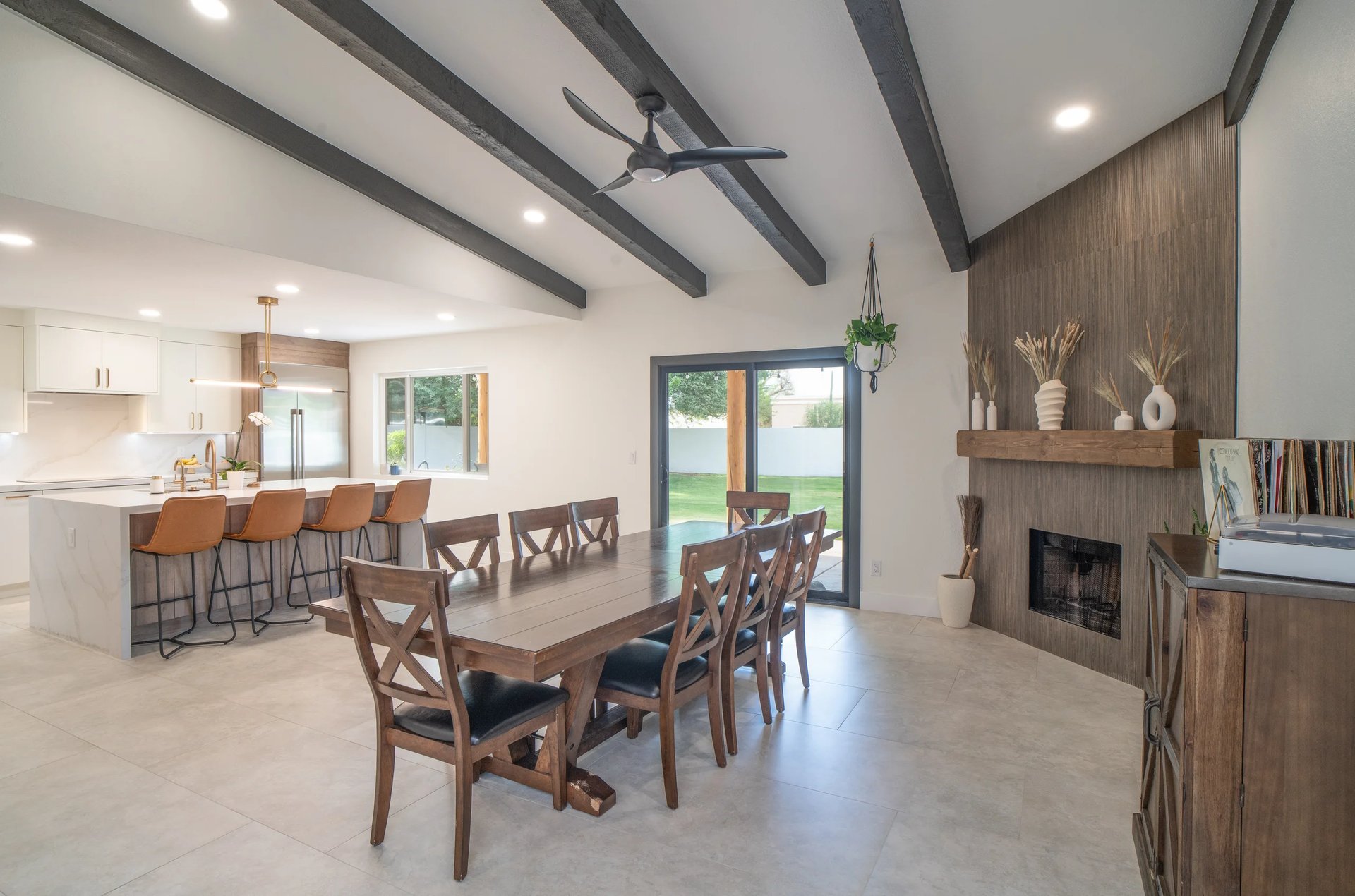
A waterfall edge carries the countertop material down one or both sides of the island — a strong design move that works especially well with veined quartz or quartzite. Our southwestern modern home project used a white quartz waterfall island as the anchor of an open kitchen and dining space.
Full-Height Slab Backsplashes
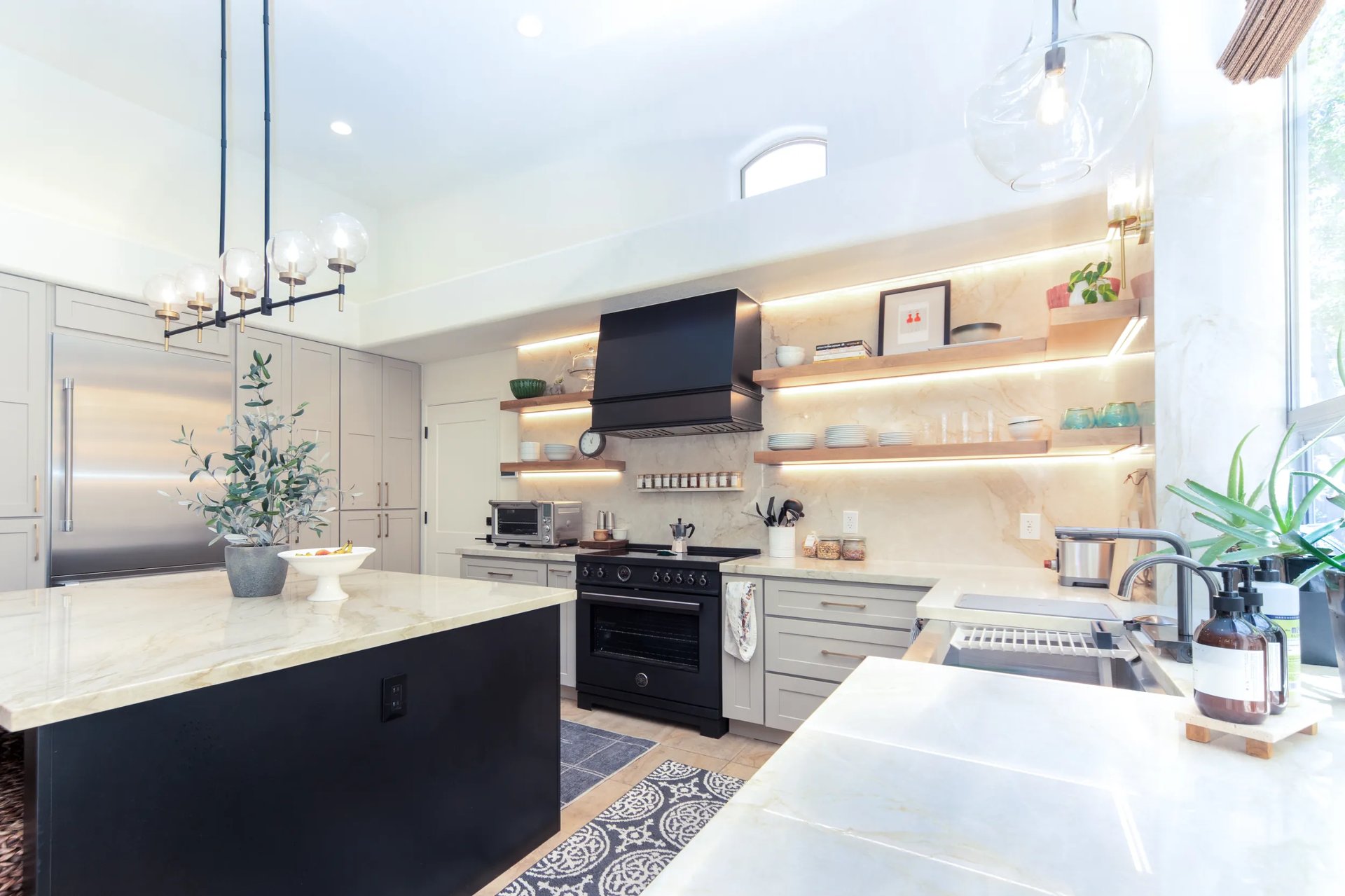
Running the same slab from counter to ceiling creates a seamless, high-end look. We used this approach with Taj Mahal Quartzite on our Transitional Bright Kitchen in Phoenix — one continuous surface from countertop through backsplash with no grout lines to clean.
Mixed Materials
Contrasting island and perimeter counters remain popular. Pair a dramatic quartzite island with quieter quartz perimeter counters, or use butcher block on the island and stone on the perimeter. The double island layout trend makes mixed materials even more practical — each zone can have its own surface suited to how you use it.
Kitchen Countertop Trends for 2026 and Beyond
Style cycles move slower in stone than in paint, but several clear directions are showing up across our Arizona projects:
Warm veining over cold gray. Gold, taupe, and greige veins — like Ventao Gold or warm Calacatta looks — are replacing the cool gray-and-white palette that dominated the last decade.
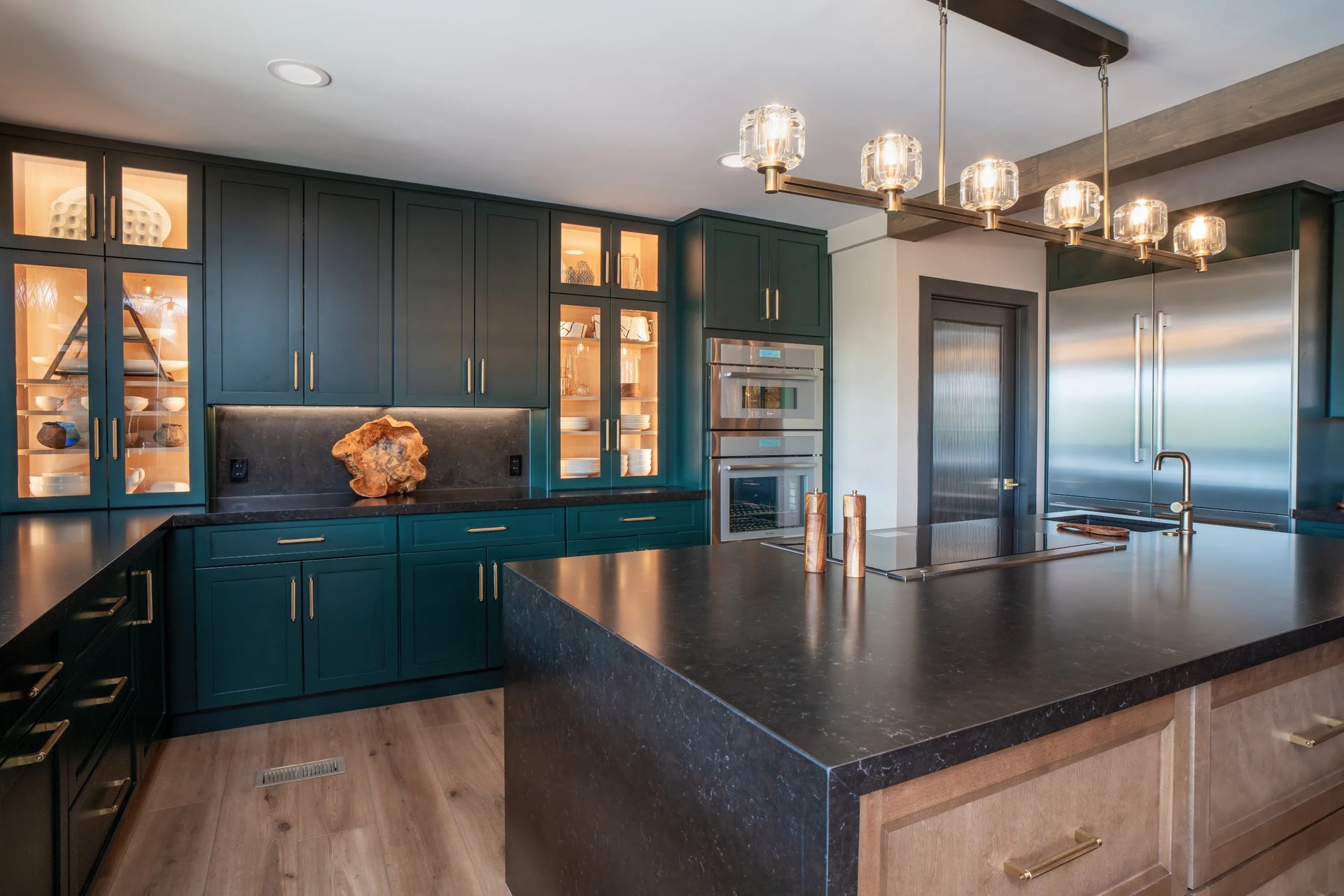
Darker, moodier surfaces. Matte black and charcoal countertops, such as Cosentino Corktown on our deep green double-island kitchen, pair beautifully with saturated cabinet colors and brass hardware.
Texture and matte finishes. Honed and leathered surfaces hide fingerprints and feel more organic than high-gloss polish. They suit Southwest and desert-modern aesthetics especially well.
Thicker visual weight. Mitered edges and waterfall details make counters feel furniture-grade rather than simply functional.
Integrated sinks and drainboards. Undermount sinks remain standard, but seamless porcelain and solid-surface integrations are growing in contemporary kitchens with clean, minimal lines.
Sustainability awareness. Recycled-content quartz, locally sourced stone, and long-life materials that avoid frequent replacement align with how many Valley homeowners think about value.
Matching Countertops to Your Kitchen Layout
The same material can behave differently depending on where it sits in the room.
Perimeter counters need heat resistance near the cooktop, adequate landing space on both sides of the sink, and surfaces that survive daily scrubbing. Factor in the kitchen work triangle when placing seams — you do not want a joint landing right where you chop every evening.
Island surfaces take a beating from prep, homework, and entertaining. Quartzite and quartz are popular here because islands are the visual anchor of the room. A waterfall edge on the island is a natural place to splurge on a dramatic slab.
Baking and beverage zones are ideal spots for marble or butcher block if you want a softer look without committing to it on every surface. Keep these zones away from the cooktop and main sink when possible.
Outdoor kitchens need UV-stable, heat-rated materials. Porcelain and dense granite outperform laminate and some resins when counters sit in direct sun. Plan landing space on both sides of the grill the same way you would around an indoor range.
Expert Tip: In design-build, we select slabs while cabinets are still on paper. That lets us adjust island dimensions to fit one slab, control seam placement, and confirm backsplash continuity before ordering — saving money and surprises during construction.
Arizona-Specific Tips for Long-Lasting Counters
Our desert climate adds a few considerations beyond what national design blogs mention:
- UV exposure: If counters receive direct afternoon sun through west-facing windows, avoid materials that fade. Porcelain, quartz, and many granites handle UV well; some resins and laminates do not.
- Thermal shock: Rapid temperature swings are less extreme indoors, but outdoor kitchens need materials rated for sun and heat — porcelain and dense granite are safer bets than laminate.
- Dust: Honed and leathered finishes show less dust than glossy black surfaces, which matter in open desert-adjacent homes.
- Slab acclimation: Let stone sit in your home for 24–48 hours before installation so it adjusts to indoor humidity before cutting.
What Kitchen Countertops Cost (Ballpark)
Prices shift with slab rarity, thickness, edge detail, and market conditions, but these ranges help set expectations for Valley kitchen remodels in 2026:
| Material | Typical range (per sq. ft.) |
|---|---|
| Laminate | $35 – $65 |
| Granite | $70 – $150 |
| Quartz | $80 – $200 |
| Quartzite / Premium marble | $90 – $250+ |
| Porcelain slab | $80 – $200 |
Island upgrades, waterfall sides, and full-height backsplashes add labor beyond the square-foot rate. A detailed quote from your remodeler should itemize fabrication, template, install, and sink cutouts.
Bringing It All Together
The best kitchen countertop is the one that matches how you actually cook and live — not just how a showroom vignette photographs. Start with function, narrow materials by maintenance and budget, then choose the slab in person with your designer or fabricator beside you.
At 123 Remodeling, we help homeowners across Phoenix, Scottsdale, Mesa, Chandler, Tempe, Fountain Hills, Cave Creek, and the East Valley select countertops as part of a complete design-build process — from slab yard visits through installation — so every surface works with cabinetry, lighting, and layout from day one.
Ready to explore options for your kitchen? Book a free consultation with our team, or browse our kitchen remodeling portfolio for real Arizona projects featuring quartz, quartzite, porcelain, and more.